
Posts tagged Africa

New CHC Country in Africa

Improving Hygiene Behaviour of Communities throughout Rwanda

Community-Based Environmental Health Promotion Programme

MINISTRY OF HEALTH   Environmental Health REPUBLIC OF RWANDA

1.  The Community-Based Environmental Health Promotion Programme (CBEHPP) is a hygiene behaviour change approach to reach communities and empower them to identify their personal and domestic hygiene and environmental health-related problems (including access to safe drinking water and improved sanitation) and to solve them. The Programme is being launched by the Ministry of Health, in December 2009.

2.  Purpose of the Programme

By 2012, the CBEHPP aims to reduce Rwanda’s existing disease burden by at least 50% and thus contribute meaningfully to poverty reduction and EDPRS outcomes. The Programme further seeks to place Environmental Health firmly on Rwanda’s Development Agenda.

3.  Priorities of the CBEHPP

Based on an assessment of the prevailing  environmental health threats to the Rwandan population, the achievement of national and global development targets requires the following to be prioritised:-

  • Improved household and institutional hygiene practices and sanitation:-
  • Safe excreta disposal with zero open defecation (ZOD) and hygienic use of toilets / latrines
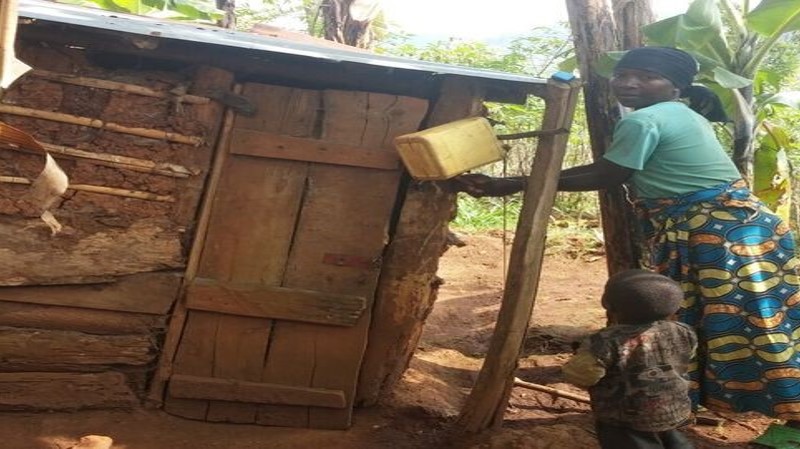
  • Hand-washing with soap and water
  • Safe drinking water handling
  • Safe disposal of solid and liquid wastes
  • Food safety and improved nutrition
  • Minimise indoor air pollution to reduce Acute Respiratory Infections
  • (e.g. promote fuel-efficient stoves with chimneys)
  • Improved Vector Control

The Programme seeks to build on the strong foundations and successes of the PHAST and HAMS (School Hygiene and Sanitation Programme)  experiences and will also encompass similar ‘best-practice’ initiatives currently being undertaken by NGOs.

4.  Implementing CBEHPP

The Programme will be implemented in three phases, with the first two lasting 6 months each, before rolling out the program to the rest of the country. The capacity of all 45,000 Community Health Workers will be strengthened, under close mentoring and supervision by Environmental Health Officers who are based at Health Centres. The health promotion training focuses on the most common diseases dealt with by local Health Centres as long as they are preventable, namely:- diarrhoea, acute respiratory infections, skin diseases, eye diseases, intestinal worms, bilharzias and malaria (i.e. 80% of the national disease burden).

The Community Health Workers will facilitate the formation of Community Hygiene Clubs (CHCs) in every village as a means towards rapidly achieving sustainable and cost-effective hygiene behaviour change in every homestead. The CBEHPP will also target institutions (schools, clinics and prisons) for hygiene behaviour change.

5.  How the Community Hygiene Club (CHC) Approach works

Syllabus and certification

The Community Hygiene Clubs will cover 20 preventative health topics during a six-month course of weekly, 1-2 hour sessions. This syllabus is listed on the CHC Membership Card and includes safe water chain (safe storage and use of water); sanitation ladder (avoiding faecal-oral diseases); sanitation planning and improving household latrines); environment (garbage pits and faecal-free yards); and self monitoring (CHC self-monitoring tools in use).

The CHC Facilitator (i.e. the Community Health Worker) signs off the Health Topics on each member’s card as soon as these topics and the associated ‘homework’ have been completed. The CHW also has his/her membership card signed off by the CHC Chair for verification. This procedure empowers the Community and strengthens the ‘contractual obligation’ to mutually follow through with the whole syllabus.

Governance of the Club

The CHC Executive Committees (Chair, Treasurer and Secretary) should be established as soon as all members

6.   Improved monitoring of behaviour change

The CHC approach can quantify behaviour change using community self-monitoring tools as an integral part of the process of change. Seven ‘Golden Indicators’ to be achieved by CBEHPP :-

1. Increased use of hygienic latrines in schools and homes (from 28% to 80%)

2. Increased hand-washing with soap at critical times (from 34% to 80%)

3. Improved safe drinking water access and handling in schools and homes to increase to 80%

4. Establishment of Community Hygiene Clubs (CHCs) in every village to increase to 100%

5. Achieve Zero Open Defecation in all villages: 100% ZOD!!

6. Safe disposal of children’s faeces in every household (from 28% to100%)

7. Households with bath shelters, rubbish pits, pot-drying racks and clean yards to increase to 80%

7.  Sector collaboration through CBEHPP

Water and Sanitation

Whilst safe drinking water can reduce diarrhoea by about 15% improved personal and domestic hygiene practices can reduce diarrhoea by over 65% (e.g. hand-washing with soap at critical times is estimated to reduce diarrhoea by 47%).

Hygiene Behaviour Change, as proposed under CBEHPP, is critical to all water and sanitation initiatives to ensure they meet their enormous potential to improve national health and living standards.

CBEHPP absolutely complements the Ministry of Infrastructure (MININFRA) efforts to provide safe drinking water & sanitation infrastructure by ensuring that the potential health & poverty reduction outcomes can also be achieved and sustained.

Local Government  (MINALOC)

The Programme provides a practical opportunity for the Ministry of Local Government (MINALOC) to achieve even greater collaboration & coordination at the district and sector levels that will result in increasing synergies through the efficient mobilisation and deployment of existing human & material resources.

Share AfricaAHEAD information on your websites:
  • Digg
  • del.icio.us
  • Facebook
  • Google Bookmarks
  • Blogosphere News
  • LinkedIn
  • MySpace
  • NewsVine
  • Reddit
  • StumbleUpon
  • Technorati
  • Upnews

CHCs starting in Umzimkhulu

15th January, 2008. Getting Going at Last

This week marks the culmination of almost a year’s efforts by Africa AHEAD and DWAF, to start up CHCs in the lovely foothills of the Drakensburg Mountains, one hour south of Durban in Umzimkhulu Municipality, Sisonke District, Kwa Zulu Natal.

The concept was introduced to the Municipality and at a full Council meeting a formal a request was made to Africa AHEAD and DWAF to go ahead with the project throughout Umzimkhulu. Councilors in all 20 Wards were given the chance to submit an application to start CHCs in their ward and to nominate a facilitator to train their community. A steering committee, comprising of a representative of all the stakeholders, has been formed to ensure sustainability of the project beyond the initial implemenation phase which is funded by Danida for the next six months. It is expected that the various gocernment departments will then contribute towards the community initiatives expected to arise from the health promotion phase. This should include upgrading and management of water and sanitation facilities as well as income generating projects related to agriculture and eco-tourism. Ten wards have already made applications and nominated their facilitators, which were then endorced by the steering committeeto ensure complete transparency.  This was an important few months as a strong foundation for this project has now been laid by ensuring the full backing of  Umzimkhulu Municipality.

On this foundation the process has now begun to build up the community through the establishment of health clubs in each ward. A three day training has just been held for training in Module 2: How to start Community Health Clubs. All ten facilitators as well as representatives from DWAF, Health and Social Services completed the training with flying colours and were given their certificates. Attending the certification ceremony were representatives from the Municipality. Mrs Vuyisa Madu, Portfolio Head for Community and Social Services, and Councilor for Ward 17 volunteered a response to what she had seen of the training… a rough translation of her Zulu words, went something like this…

I have not been asked to speak but I have been so moved by what I have seen, that I have to say something from my heart. I just cant believe that people from the community can now express themselves so well after this short training. It is only in ten wards at present but we must make sure that this project is taken into all twenty wards in Umzimkhulu.’

Her enthusiasm was encouraging as she was referring merely to the training facilitators from the community, who she felt had been well equipped to return to their village and mobilise effectively. We are hoping she will be even more impressed when the facilitators start their health promotion sessions within their communities. Well done to the Africa AHEAD facilitators, Jason Rosenfeld and Moses Mncwabe for making the training such an effective start up.

Participants at the 1st Umzimkhulu CHC training workshop 14th January 2009
Participants at the 1st Umzimkhulu CHC training workshop, Kwa Zulu Natal. 14th January 2009
Share AfricaAHEAD information on your websites:
  • Digg
  • del.icio.us
  • Facebook
  • Google Bookmarks
  • Blogosphere News
  • LinkedIn
  • MySpace
  • NewsVine
  • Reddit
  • StumbleUpon
  • Technorati
  • Upnews

Latest News from the Project Areas

Content


Click the images below to hear what the community have to say about their Health Clubs.

Community Voices

Changes to life   Self Esteem                             Love of Knowledge A word from the community. Health Club Members Kitchen Pride Self Esteem A word from the community. Health Club Members A word from the community. Health Club Members Self Esteem A word from the community. Health Club Members