South Africa, KZN Poster
This poster is a visual summary of the Danida funded IWRM project in South Africa, where 10 CHCs achieved high levels of behaviour change within an 8 month period.
Community Health Clubs were started in Mutare, Zimbabwe in an effort to combat the rapid spread of Cholera in Zimbabwe in 2009. This is an inspiring account of how well mobilised women were able to role back this deadly threat and prevent any daths from cholera in this high risk area. The paper presented at IWA Conference in Mexico 2009, also includes an example from Uganda where overcrowding and poor sanitation in IDP Camps was similarly addressed through Community Health Clubs.

August 2009
In January 2009, 10 communities within Umzimkhulu, one Local Municipality within the Sisonke District, began training as members of Community Health Clubs (CHC), a new initiative piloted by Africa AHEAD for the Department of Water and Environmental Affairs’ (DWA) Integrated Water Resources Management (IWRM) program. This Government pilot project, with funding provided by Danida (the Danish international aid organization), was initiated so as to improve community use and management of water resources. Since January, almost 1,000 community members have joined the ten community health clubs and have been meeting weekly to learn how to improve their lives through a structured health promotion program that encourages sustainable water, sanitation and hygiene behavior change. Now, seven months later, 550 members have completed the health promotion curriculum and are ready to celebrate their achievements during the Community Health Club Graduation Ceremony scheduled for Wednesday, September 16, 2009.
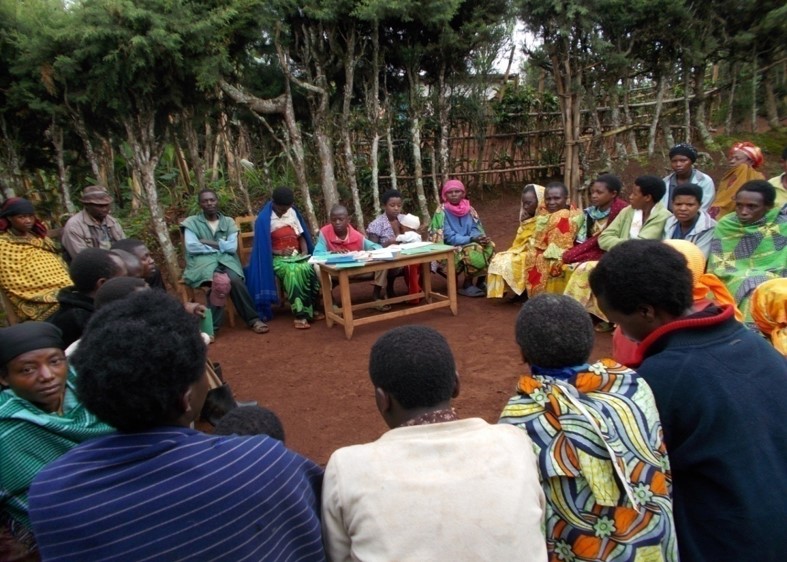
Fig.1. Women gather for the weekly health club session
The Community Health Club (CHC) approach enables the poorest of the poor in urban and rural communities to take full control of their own development by building effective social structures at the grassroots level known as Community Health clubs. The CHC strategy and training pioneered by a South African NGO, Africa AHEAD Association, builds the capacity of communities to manage their own health and development, ensuring that all initiatives are fully sustainable and holistic in scope. Informed decision-making through active participation and consensus building, changes a loose connected community into a ‘real community’ with ‘Common-Unity’. The inspiration for the CHC concept is closely linked to the South African understanding of ‘Ubuntu’, community togetherness and mutual support, which is an indication of a healthy Community. This attention to social cohesion is the hallmark of the CHC strategy, which should ideally be a process of development that begins with health promotion and hygiene behavior change. Once club members have completed the health promotion activities, they are then encouraged to move on to larger and sometimes more difficult developmental challenges such as the provision and management of water and sanitation resources; sustainable livelihoods through skills development and agriculture; and social responsibility for less advantaged community members. This phased approach allows club members to build upon each successive achievement, building ‘Common-Unity’ along the way.

This CHC Pilot Project in Umzimkhulu took place from February to August 2009, with six months of health promotion sessions (Phase 1 of the AHEAD Model), where members were given the opportunity to discuss issues surrounding common health problems through the use of visual aids and participatory activities. Members were also encouraged to support each other as they put their new knowledge into practice at home, and within weeks it was possible see the changes they had made to their homes and lifestyles. These concrete changes are the observable indicators of this new ‘Culture of Health’ that the CHC Approach emphasizes. At regular intervals throughout the project, a household inventory was taken, which notes the levels of uptake of 10 recommended practices that are vital if common diseases such as diarrhea, worms and skin disease are to be prevented through improved hygienic practices. It has been proved that if these practices are widespread within a community, these diseases can be greatly reduced, with a consequent saving of lives and cost to health services.
Figure 2: Members of the Bhulebezwe CHC discuss issues about personal hygiene
To date, over 80% of all registered members are following the recommended practices promoted during the weekly health promotion sessions. These practices include the safe storage and use of water, improved kitchen hygiene through safe food storage, the creation of a dedicated hand washing facility with soap at or near household latrines, and the use of a safe water source. To begin with, almost all registered members now store their water in a safe and sealed container, fetch their water using a ladle or pitcher, and store all food in containers that prevent contamination by flies. In addition, whereas only 29% of member households had a dedicated hand washing facility near their latrine at the beginning of the project, 82% have now constructed a simple facility that allows them to wash their hands immediately upon exiting their latrine. Even more impressive is the use of soap for hand washing. Finally, while 38% of member households had soap for hand washing in February, 94% of member households had provided soap by the end of July. This huge change in hand washing practice together with safe food and water will insure there is a drop in the prevalence and incidence of diarrhea, one of the most common health problems which threaten young children especially in Umzimkhulu. With these changes occurring within participating communities, there is little doubt that family health has been improved where health clubs have been established.
As can be appreciated from the chart above, the Community Health Clubs have responded enthusiastically to the information they have been learning in their clubs and applying the knowledge to improving their home hygiene. Taking ten indicators of their response we find that from the first month (blue bars) to six months later (red bars) the change has been extensive. Firstly all ten indicators show that over 80% of all the members are following the recommended practices. Secondly if we take the average of all ten practices we find that there is 36% change in six months. Some of the practices were already quite high (above 60%) but even so, it is clear that the members who did not practice the hygiene at the start of the project are almost all practicing the recommendations now. We find almost all the members are now using safe drinking water, using a ladle to take water, covering their drinking water well, keeping their food well stored and practicing zero open defecation. Use of soap when handwashing has shot up a staggering 56% (from 38% to 98%), and 53% (from 29% to 82%) have constructed a hand washing facility. This huge change in hand washing practice together with safe food and water will insure there is a drop in the prevalence and incidence of diarrhea, one of the most common health problems which threatens young children especially in Umzimkhulu.
Most impressive of all, however, are the self-motivated improvements that some Health Clubs have made to their water sources. It was observed that at the beginning of the project that approximately 50% of participating households obtained their water from an unprotected source, such as springs, streams and rivers. After learning about the importance of obtaining water from a protected source (i.e. water that is sealed or protected from contamination at the surface) club members have been actively taking measures to protect their water sources. Two of the health clubs have even made technical improvements to protect their water without any financial or technical assistance from government. Each and every achievement of these Health Clubs highlights the objective of the CHC Approach, which is to help communities take their health into their own hands and manage their own resources more effectively, at least until government can provide the required services.

On Wednesday, September 16, 2009, over 500 graduates throughout Umzimkhulu will be honored at the Hall at the Umzimkhulu Teachers College. During this public ceremony, each of the Health Clubs will demonstrate to the rest of their municipality, district and province what it means to be a member of a Community Health Club. Prizes will be given for the best homestead and most proactive health club and there will be much celebration of good hygiene achieved. Songs about the importance of hand washing will be sung, dramas highlighting the knowledge shared and gained throughout the 7 months of health promotion will be performed, and all those who have attended all 24 sessions will be given a certificate of achievement.
Fig 3: over 50% of the health club members get water from a source like this.
This is not only the moment to celebrate the achievements of these CHC members, but it is also as a coming of age of each Health Club. As the project funders (DANIDA) and implementers (Africa AHEAD, and DWA) withdraw from their role as initiators of the scheme, local leadership is now set to take their rightful place as instigators of future development through the health clubs. While all councilors have been fully behind the clubs since their inception in their respective communities, the celebration being hosted by Umzimkhulu Municipality is a very public demonstration of this determination to support local community efforts and ensure every family has a healthy future. It is now up to the graduated membership to become the standard bearers of health and development for their community. Now is the time for these communities to demonstrate the power of Ubuntu that Nelson Mandela saw within each and every one of his South African brothers and sisters. With President Zuma’s clear focus on the welfare of rural people, the municipality of Umzimkhulu is set to become an example of sustainable development and how the combined effort of a critical mass of women can bring new standards of home hygiene and improved family health.
Umzimkhulu is one of the most disadvantaged of all areas of South Africa. Levels of water provision by government are unacceptably low, with 80% of the community within this project still using unprotected open water sources. In addition, the recent base line survey shows that hygiene and sanitation practices are equally appalling, and health knowledge is negligible, with only 18% of the community having a good knowledge of 6 health topics. The combination of poor facilities, poor hygiene and poor knowledge is causing high levels of infectious diseases : diarrhoea from unsafe food and water, skin diseases from lack of washing and worm infestations which inhibit child growth and damage levels of achievement at school. However change is in the air. In ten wards of Umzimkhulu communities are stirring and wakening from their sleep. In January 2009, Community Health Clubs were started in nine out of the ten projected Wards, and there are now a total of 883 members. Given an average of 5.4 persons per household this means there are already 4,768 direct beneficiaries of this project. From past experience we know the diffusion of information from each member extends to neighbours who often change their hygiene habits due to peer pressure even if they do not become a CHC member and attend the health club sessions. Therefore it can be assumed that the impact of the project will be on over 10,000 indirect beneficiaries.
In the first two months since mobilisation started in February 2009, there has been a good response to the project. As hoped the average size of a health club in Umzimkhulu is 98 members per club, with the largest club being in Ward 4 with 144 members. However the size of the club does not always mean that it is the most effective club, as large clubs can merely reflect a more dense population or be because people in some areas are more prone to hope to receive something, but may not continue to attend if there are no handouts. The success of a club will depend on the number of active members who attend regularly, not just those who are registered. The most accurate measurement of a successful facilitator is that of average attendance for each session, because this shows that members continue to find their sessions interesting and worth attending. Ward 15 and Ward 18 have equally the highest attendance rates (both at 60%) whilst the lowest is Ward 8 with only 23% attendance.

March Star Facilitator: Buyisiwe Majola, Ward 13, Zibambele Club, enjoys her role as facilitator and is setting a high standard for her colleagues to follow, having conducted over 200 household visits.
Five facilitators have done four sessions at their clubs, whilst the remaining have done two or three sessions. Only one facilitator has failed to form a club in Kwa Gijima (Ward 17) which was one of the villages selected as a case study. Her failure to conduct any sessions after two months has resulted in the Project Steering Committee requesting her counselor to find a replacement facilitator. As this project is attempting to use community members rather than trained health personnel as facilitators in an effort to ensure sustainability and build capacity at the grass roots, it is inevitable that there will be some poorly chosen facilitators who do not have the capacity for the job required. However we are delighted that 90% of the facilitators are coping well, although they need considerably more training and support than is normal when NGO or government Environmental Health staff are used as CHC facilitators. Normally when higher educated staff are facilitators Africa AHEAD provides a one-off training workshop at the beginning of the programme. However in Umzimkhulu, most selected facilitators have only a basic education,and therefore need more regular support. A full time Project Manager and Project Officer are on site and provide continual top-up training and monitoring as needed. Monthly training sessions provide support for facilitators who are taught the next four sessions for the forthcoming month.
The facilitator of the month is Buyisiwe Majola from Ward 13, who has shone out this month for her enthusiasm and hard work. She has registered 96 members, and conducted 205 surveys. While some facilitators are battling to visit all their members homes, she has completed not only the base-line household inventory but is now on the second round of household visits checking on whether there have been any changes within the past two months. Her health club, named Zibambele has 96 members, and she has conducted the four sessions as instructed. Other facilitators are also doing well, particularly Gladys Mkhise, who has successfully galvanised her community into action, surprising people with her energy and ability to mobilise, dispite being a pensioner. She says, ‘One is never too old to learn or contribute to the well being of one’s community.’ The slogan her members have adopted ‘Vukamawulele!’ means ‘Rise up from your sleep!’
| Facilitators | Club Name | Members | Sessions | Avg Attendance per Session | H/hold Obs Completed | ||
| Name | Surname | Ward | |||||
| Nomawethu | Thusi | 2 | Siyakhulu | 82 | 2 | 37% | 76 |
| Gladys | Mkhise | 4 | Sakhisizwe | 149 | 4 | 34% | 119 |
| Nomhle | Dlamini | 5 | Buhlebezwe | 104 | 4 | 55% | 111 |
| Patience | Njobe | 6 | Hlanganani | 66 | 5 | 52% | 42 |
| Nomfanelo | Phumlomo | 7 | Masikani | 102 | 4 | 37% | 83 |
| Nolwazi | Mdlozini | 8 | Vukuzakhe | 122 | 4 | 23% | 38 |
| Buyisiwe | Majola | 13 | Zibambele | 96 | 4 | 43% | 205 |
| Thembinkosi | Mbenste | 15 | Masizakhe | 86 | 2 | 60% | 43 |
| Ncediswa | Mbokazi | 18 | Siyazinzela | 76 | 2 | 60% | 38 |
| TOTALS |
883 |
27 | 43% | 755 | |||
The base line survey has been completed for Umzimkhulu and provides some guidelines as to the most pressing gaps in health knowledge that can be filled and hygiene behavior that can be changed by the Community Health Clubs. Based upon the results of this report, and given that the three selected villages are representatives of the whole of Umzimkhulu, it would appear that the CHC Approach can make significant differences in the lives of the participating communities. The three selected villages represent a high, medium and lower living standard and it is reasonable to assume that the rest of the district will fall somewhere in between. It would also appear that the topics to be done in health promotion sessions are indeed appropriate for the target communities, and that the training can proceed without alteration to the training materials. If the 24 health sessions are completed as planned we can expect that there will be significant improvement in health knowledge and behavior, and would predict an average of between 20-30% change in most hygiene behaviours.

The training intends to focus on water usage and storage, safe disposal of human faeces and solid waste, as well as diseases that can be prevented by poor hygiene such as diarrhoea, scabies, ringworm, and intestinal worms. This report highlights that there is indeed room for improvement in all these areas. 80% of the households that were surveyed in the three villages still use unprotected water, and 51% have dirty latrines, 60% had a fly problem in kitchens of with only 43% of those with left over food making any to protect food from flies. 55% of households reported rats were a problem and with 74% reporting a rubbish problem and with 54% of households having solid waste within close proximity, these are areas that can be improved significantly. Handwashing probably provides the best opportunity to impact on the prevalence of diarrhea as only 8% households use soap regularly. As regards levels of health knowledge there is little doubt that the programme will register a significant rise in good health knowledge from the average of 18.6% for the six topics which were asked.
It is also clear that the district of Umzimkhulu is an ideal area for a pilot project as the level of safe water supply, sanitation and general hygiene is decidedly low as compared to more developed areas in Kwa Zulu Natal. This low base line will enable a clear measurement of impact using the proxy indicators that have been carefully linked to the training and the recommended practices which are expected to be put into place within the next six months. Given the current low provision of safe water supply and adequate sanitation, this base line report should to circulated to service providers of water and sanitation to alert the relevant authorities that within a few months there will be a sudden demand as a result of this training programme, and that planning to deal with this demand should be already in place to ensure a seamless transition from demand creation to improved living conditions in Umzimkhulu.
Now that the base line survey is complete, the Community Health club training will start in 10 wards. the facilitators have been selected from the community and are being trained in bi-weekly sessions. They have already mobilised their communities and initial response is very encouraging. There are estimated to be an average of 75 members per club and one club has even exceeded 150 people all looking forward to the future training. Most facilitators have already done five sessions and will be finished within another five months.
Start up has been delayed by two months due to slow uptake by some councillors but reports are now coming in that the councillors are excited about the initial activities and those that were slow to apply for the project are now regretting the fact that they missed the deadline. At present this project is supported by Danida and IWRM until June 2009 through the Department for Water Affairs and Forrestry but given the demand there is likely to be a viable programme in Umzimkhulu for many years to come and support is being sought for the scaling up of this novel approach that holds such promise for the poorer areas of KwaZulu-Natal.

Public Health Promotion Programme for Urban Humanitarian Crises in Sakubva, Mutare.
Zimbabwe AHEAD in Partnership with Oxfam Reported by: Regis Matimati, Zim AHEAD, Project Manager, March 2009.
UN says Zimbabwe cholera cases rise above 80,000 : 20th February 2009
Geneva – The UN health agency says the number of cholera cases in Zimbabwe has soared above 80,000. The World Health Organization said Friday that the death toll is now 3,759 out of 80,250 cases. Spokeswoman Fadela Chaib said those figures include all reported cases and deaths since the outbreak began in August through Thursday. Cholera has spread rapidly in the African nation because of Zimbabwe’s poorly maintained infrastructure and crumbling health care system.
Zimbabwe AHEAD is playing its part in the national cholera emergency, which is now an everyday reality for most citizens in Zimbabwe who live in the many high-density suburbs where the water supply is now often contaminated with e-coli. Cholera can be prevented but it requires well disciplined communities to coordinate public hygiene behaviour to limit the spread of the disease, by protection of water sources, hand-washing with soap and safe faecal disposal. We are galvanising communities to protect themselves from killer diseases such as cholera through the training we have been providing for Community Health Clubs (CHCs) since 1997. Whist in normal circumstances, Community Health Clubs in Zimbabwe have a six month course of 24 health sessions, the panic caused by the ravages of cholera means that emergency measures have to be put in place and (like the farm invasions) the training has to be fast tracked.
Oxfam, which has been at the forefront of emergency programmes in the SADC regions for years has subcontracted some of this relief efforts to Zimbabwe AHEAD. In Mutare, the selected project area has seen 126 Cholera cases since the out-break, with 5% Case Fatality Rate (6 deaths). Our project started in Mutare in October 2009, targeting the sprawling high density suburb of Dangamvura in an effort to contain the outbreak. A few months later there are now 10 health clubs, varying from 61 – 496 members, with the average club size of 182 active members. Club attendance rose over the past few weeks to a total of 3,320 people but regular registered members are 1,400 of which 84 (6%) are male while 1,316 (94%) are female. The reason for this sudden upsurge in attendance is attributed to the fact that CHCs are a new phenomenon and many people hoped this was a way of getting onto the Non Food Item (NFI) register, a package given to the most vulnerable. Instead by joining CHCs they are provided with the means, by health knowledge, to defend themselves against cholera by their own efforts. So far club members have had 4 health sessions each; one on club membership ground rules, norms and values, cholera awareness, community diseases burden and setting up club interim committees. One CHC is so already enthusiastic the members are already all geared up to hold a clean-up campaign in their catchment area.
CHC members household Baseline Data
Because it is important to be able to measure all achievements in hygiene behaviour change, a a household inventory was done by CHC members themselves. Already 2,629 visits to all CHC members households have been done in groups and a picture of the health and hygiene enabling facilities was constructed for the Sakubva community. This information will form a base upon which our CHC activities will be measured as we aim to raise the percentage coverage by at least 30%, especially in those areas with such a low percentages. For example, only 15% currently have rubbish pits, and although 86% have a safe water source this is likely to become contaminated by dirty handling as only 16% are using a ladle to take drinking water from water stored at home and only 41% have safe closed water storage containers. Some positive findings are that 89% have a toilet although the cleanliness of the toilet is important as may if exposed to flies, the health risk of open defecation is not averted. Important for other diseases than cholera and diarrhoea, we found that 91% of the household have a bathroom (important to prevent water washed diseases such as scabies and ringworm); 75% have well ventilated bedrooms (known to affect rate of respiratory infection), although only 20% have mosquito nets to prevent malaria which is on the rise in Zimbabwe in recent years.
Non Food Item emergency packages
The 2,375 NFIs beneficiaries who receive the emergency package have been given Cholera awareness and response sessions by Zim AHEAD with their accompanying relatives and family members,at the distribution site. 2,375 beneficiaries received double issue of soap and cotton wool from the NFI handouts, and the remainder 625 will receive during a mop up exercise as distribution was hindered by incessant rains that fell during the distribution period.
Trainer of Trainers for School Health Clubs
A five day training for school health masters / School Based Facilitators (SBFs) was held in Mutare from 09 to 13 February 2009 and was attended by 24 school health masters, as well as the Mutare City Chief Nursing Officer, one Environmental Health officer, four District Education Officers and two officers from the Min. of Education ‘Better Schools Program’. The aim of the training was to equip the SBFs to run the school health clubs. The workshop was successful and the Min officials spoke highly of the course content and where sure this had capacitated the teachers to successfully run the school health clubs. However the only drawback is the fact that to date most of the school children have not yet gone back to schools, but hopefully things will normalise soon. The school health masters are ready to roll out the school health program as soon as schools get back on track. We will closely support them on this endeavour.
Scaling Up Cholera Response
Based on the success of the community mobilisation through Health Clubs, Zim AHEAD was asked to scale up activities into six more wards in the Mutare area (Wards 15,6, 18, 9,7,8) training volunteers to help prevent the spread of Cholera. A training was held for 40 Public Health Promotion (PHP) volunteers on 11th/12th Feb, 2009, to ensure they understand cholera (disease picture, germ theory, prevention and control, management of a cholera case in the home and on the way to a CHC) and they were taught to use the Zim AHEAD tool kits on Germ Theory, General Hygiene, Water Storage, Water Sources, and Sanitation Ladder. In addition they learnt of other participatory activities such as Focus Group Discussions, picture cords, drama, song and dance etc). Volunteers were drawn from various youth groups, middle-aged and elderly, socially responsive residents of Dangamvura. One of these is a Pastor’ swife from one of the churches. We also got representation from a local community based organisation; the Community Working Group on Health.
Public Health Promotion
After the training volunteers were returned to their suburb, to do their duties which are going well. Cholera awareness and response sessions were conducted in some sections of all the 6 wards with volunteers going in groups of six. Door to door campaigns were also done as well as public meetings and attendances to public gatherings were discussions were facilitated. During the Non Food Item (NFI ) distribution, daily a pre-distribution public health promotion was held with all prospective beneficiaries and their accompanying relatives In total, an estimated 10,896 people reached during the month in this exercise. In one of the wards people have been mobilised and are holding clean up campaigns on their own. Schools were also approached and an estimated total of 1,250 pupils were reached.
NFI Registration distribution
With the support of the volunteers, about 4000 NFI beneficiaries have been registered targeting the most vulnerable members of the community. NFIs were collected from Blue Ribbon Foods and ferried by a hired ZimAHEAD Lorry to the 5 distribution sites in Dangamvura daily as needed. A total of 2,688 beneficiaries got 2 bars of soap each – of these, only 2000 got Aqua tabs, but the remaining 1,312 who did not turn up to receive their issues, will be given them in the first week of March.
Other Efforts in Catchment area
Mercy Corps (MC) with funding from UNICEF have embarked on a blanket NFI distribution in the cholera hot spots in Mutare city. ZimAHEAD was involved in setting up the Mercy Corps distribution plan where we highlighted the hot spots. We have seconded our trained volunteers to the MC project for public health promotion sessions in the spirit of collaboration. The MC Project Officer responsible for NFIs spent a morning at one of our NFIs distribution site on a look and learns visit aimed at helping MC design their distribution plan. We are working in close cooperation on this aspect.
Challenges
Almost everyone encountered during PHP is asking for Aquatabs as they know that even though they do not qualify for our NFI, they are still vulnerable given the scarcity of water in Dangamvura. They are requesting to provide these since they are not available anywhere else. We however encourage other water purification means like boiling and chlorination as a stop-gap measure for non beneficiaries.
There were some incidences of political meddling where a couple of councillors feel they should be involved on the beneficiary selection for NFIs. We have managed to deal with such situations by explaining our position and it has helped reduce tensions.
The PHP walk on foot to support the community volunteers and this is quite a mammoth task given the vast distances that need to be covered in the operation area.
Opportunities
Now the training has been done and the CHCs started, we realise that we need a capacity building initiative to prepare management committees that will run the project after we have gone. The committees will sustain the CHC when the program winds up and we use them as an exit strategy. We are in the process of putting together a training module for such trainings and are proposing to run these trainings as soon as funds are available.
Conclusion
We would like to highlight the continued strategic relationships and partnership that we have with the Mutare City Council and other NGOs working in Mutare. We also value the support and cooperation that we are getting from the Sakubva and Dangamvura residents and as a result we will do our best to keep cholera under control.
CONTACT: Zimbabwe AHEAD: Sakubva District Hospital, MUTARE: 0913 038 700 / 011 442 219 regismati@yahoo.com

In March 2007, Zimbabwe AHEAD joined forces with Mercy Corps, one of the few International NGOs which continues to operate in Zimbabwe, despite the severe operational problems of working in a country where the inflation rate is over 4000% and vital commodities such as fuel and cement are in short supply. Zim AHEAD was contracted to introduce the Community Health Club approach into the two districts where Mercy Corps had started a water and sanitation programme, namely Chipinge and Busia Districts in Manicaland Province, in the south east of Zimbabwe. Training to start up health clubs in Chipinge was completed in October, 2007, with a one week workshop run by Zimbabwe AHEAD. Twelve Village Health Workers were selected for training in four wards and each undertook to start at least two clubs with a target of 70 members per health club. In fact the community response was overwhelming and within four months there were over 33 health clubs with over 3000 active members, with a demand to start up clubs in adjoining areas. The Rural District Council is delighted with the response and the assistant District Administrator has vowed to make the Community Health Club methodology the standard modus operandi for the whole district. With only four out of 25 wards currently covered by the existing project, funds are bing sought to expand this project district wide.
Mercy Corps was introduced to Zimbabwe AHEAD in November 2006, during an evaluation of the Water and Sanitation programme in Buhera and Chipinge Districts, funded by British Lottery fund (BLF). Looking for a feasible health promotion component in the programme, the Mercy Corps team visited the Makoni Community Health Club Programme and were impressed by the ability of Community Health Clubs to achieve sustainable development. On the strength of this empirical evidence of sucessful development over the past decade, Zimbabwe AHEAD, was invited to join Mercy Corps as an implementing partner to take over the health promotion component of the BLF Programme, and a rapid start up was achieved within two weeks of the funding being received.
The health promotion programme started with a one week training workshop between 23rd – 27th April, 2007, in Chipinge District, with a total of 34 participants trained. Facilitators from Zimbabwe AHEAD were the Director, two Project Officers and District Coordinator from Makoni. A second workshop was due to be held the following week in Buhera. However, in a country grounded by political control, this training was cancelled at the last minute – a political directive based on suspicions as to why an American NGO was choosing to work in Buhera, the opposition leader, Morgan Tsvangirai’s own constituency. To-date, Mercy Corps and Zim AHEAD have had to cancel all activities in Buhera, until after the election due in March 2008, after which it is expected that the political paranoia should decrease. This fear by the authorities of community organisation through health clubs and the benefits from such a project, that may swing votes, is interesting as it illustrates the power of community health clubs to be an instrument of political change, well recognised by those who fear change.
In Chipinge, where the project has been allowed to continue, the response from the community in joining and attending health sessions has been overwhelming and far beyond expectations. The initial target of 12 clubs, one per facilitator, has been long forgotten, as facilitators take on far more than was planned, despite having had no transport allowance nor per diems in the first months. Mobilisation began in May, and each month since then has seen a steady increase in registration.
By September, some clubs of 100-180 members had to be divided into two clubs to enable participatory training to be more effective. By Nove 2007, there were 33 health clubs with 2,506, with an average of 76 per club. Clubs were still being formed and a ceiling of 4 clubs per facilitator had to be instigated to ensure facilitators could effectively manage their duties. Facilitators were being given US$1 per session from October, which has, of course, provided a strong incentive for more health clubs to be started. There is also a strong demand for knowledge from other areas where no health clubs has been started, which indicates not only the need for health promotion in the area, but also the acceptability of the AHEAD methodology and the ability of the community facilitators to mobilise their communities effectively.
Looking at Fig 1, below we can draw the following conclusions on the achievements of the project to-date:
Whilst Zim AHEAD has always used the government health workers, called Environmental Health Techinicians (EHTs) who have had a strong 2 year training in Public Health, Mercy Corps determined that, due to the shortage of EHTs in Chipinge, we would have to rely on Community Health Workers from the villages, despite the fact that they often have little background in health education. Whilst the community facilitators have achieved high levels of mobilisation in the village with impressive community response, the quality of the health training given by them is fairly low, compared to the EHT’s ability to facilitate. Whilst they can handle the hygiene sessions related to diarrhoea on their own, they do not have the confidence to run the more complicated sessions relating to diseases such as Malaria, Bilharzia, worms and skin disease, without assistance from the EHT. By contrast, the qualified EHTs are well used to training community. they are also recognised by villagers as having mandate to train, whilst their neighbours, the newly ‘qualified’ health workers are only one weeks training ahead of their peers, who understandably often deride their efforts at training.
The CHC facilitators who have been village Health workers for some time are clearly more effective than those who have been nominated by local leadership for other reasons, and have no understanding of health issues. In none of the sessions that were reviewed in this Mid Term Assessment (see shaded areas in Fig 1.above), did the facilitators conduct the training alone. Instead they played a support role to either the EHT or PO, as they were not confident to train on their own. As such they can be considered to be still in training, particularly in the more difficult sessions on nutrition, malaria, bilharzia, skin diseases, and worms.
However, it is expected that with time they will learn the issues and next year, on their second intake, they should be able to cope on their own, with less support from our staff. EHTs will still needed to monitor and ensure standards are maintained. However the sustainability of continued health promotion in the area, even if the NGO and MoH are not active is the main advantage of this model as each club now has a community facilitator in their own area.
There are three EHTs, two men and one woman, who were all trained in the initial workshop, who are res0ponsible for monitoring the Community Health Workers. To begin with these EHTs did not have any transport to do this monitoring, and it is only in the last two months that the two men have received motor bikes and fuel for monitoring, whilst the woman continues to use public transport, frequently having to sleep in villages due to lack of buses.
The response from the EHTs to the Community Health club approach is encouraging and some of the benefits they mentioned are as follows:
Some interest has been raised by a preliminary look at the household inventories that appear to indicate that some people are voluntarily building latrines without any external assistance. For example the records of Rujeko club (ward ) show that in June there were 39 latrines in the area, and by October there were another 39 new latrines, leaving only 13 members without facilities. If this is true it may be a startling response to the training. These records need to be verified by the EHT whose duty it is to record the number of latrines and new constructions within their ward. The EHTs have agreed to do this in the next few months and PO’s should follow up and raise this issue in the EHT meetings each month, to ensure CHC activities are fully integrated in MoH report.
It was also noted that other activities in the area will affect the project. PLAN is to distribute ITNs (Insecticide Treated Nets) to the entire district before the rains in November. Last year there were 3,000 distributed in ward 28, and 388 ITNs distributed in ward 29 and 30 for under 5’s and pregnant mothers. There will also be straying of breeding areas, and training for choloquine holders. This will involve all households but it would be better to involve the health clubs in this monitoring usage of nets to ensure these ‘hand outs’ are properly used. The idea of having community health clubs is to help mange health within the community. It is essential that PLAN is fully appraised of the activities and whereabouts of each CHC so that they can tap into this community structure as a resource to ensure sustainability.
The first six months of this project has gone exceptionally well despite the many potential difficulties of new personnel and unreliable transport. Mercy Corps has been supportive and Zimbabwe AHEAD has played its part, and there are no major problems from either of the partners. The output in the field has been remarkable with all targets exceeded. There are now over 3,000 Community Health Club members in 33 clubs within a short period of four months, with an ever increasing demand. The only drawback was the enforced withdrawal from Buhera but this has enabled Chipinge to speed up its project. When Buhera starts next year it will also be ‘fast tracked’ with two project officers stationed there. The EC programme will allow the AHEAD methodology, with its long term holistic development process to be taken to the full extent, and preparations are underway to start in December 2007 in the two existing districts as well as Chiredzi. ZimAHEAD looks forward to the next half year, and the final report for the BLF funding will be submitted in May 2008.The MoU between EC and Mercy Corps was signed and funding began in December 2007.
By 2012, the CBEHPP aims to reduce Rwanda’s existing disease burden by at least 50% and thus contribute meaningfully to poverty reduction and EDPRS outcomes. The Programme further seeks to place Environmental Health firmly on Rwanda’s Development Agenda.
Based on an assessment of the prevailing environmental health threats to the Rwandan population, the achievement of national and global development targets requires the following to be prioritised:-
The Programme seeks to build on the strong foundations and successes of the PHAST and HAMS (School Hygiene and Sanitation Programme) experiences and will also encompass similar ‘best-practice’ initiatives currently being undertaken by NGOs.
The Programme will be implemented in three phases, with the first two lasting 6 months each, before rolling out the program to the rest of the country. The capacity of all 45,000 Community Health Workers will be strengthened, under close mentoring and supervision by Environmental Health Officers who are based at Health Centres. The health promotion training focuses on the most common diseases dealt with by local Health Centres as long as they are preventable, namely:- diarrhoea, acute respiratory infections, skin diseases, eye diseases, intestinal worms, bilharzias and malaria (i.e. 80% of the national disease burden).
The Community Health Workers will facilitate the formation of Community Hygiene Clubs (CHCs) in every village as a means towards rapidly achieving sustainable and cost-effective hygiene behaviour change in every homestead. The CBEHPP will also target institutions (schools, clinics and prisons) for hygiene behaviour change.
The Community Hygiene Clubs will cover 20 preventative health topics during a six-month course of weekly, 1-2 hour sessions. This syllabus is listed on the CHC Membership Card and includes safe water chain (safe storage and use of water); sanitation ladder (avoiding faecal-oral diseases); sanitation planning and improving household latrines); environment (garbage pits and faecal-free yards); and self monitoring (CHC self-monitoring tools in use).
The CHC Facilitator (i.e. the Community Health Worker) signs off the Health Topics on each member’s card as soon as these topics and the associated ‘homework’ have been completed. The CHW also has his/her membership card signed off by the CHC Chair for verification. This procedure empowers the Community and strengthens the ‘contractual obligation’ to mutually follow through with the whole syllabus.
The CHC Executive Committees (Chair, Treasurer and Secretary) should be established as soon as all members
The CHC approach can quantify behaviour change using community self-monitoring tools as an integral part of the process of change. Seven ‘Golden Indicators’ to be achieved by CBEHPP :-
1. Increased use of hygienic latrines in schools and homes (from 28% to 80%)
2. Increased hand-washing with soap at critical times (from 34% to 80%)
3. Improved safe drinking water access and handling in schools and homes to increase to 80%
4. Establishment of Community Hygiene Clubs (CHCs) in every village to increase to 100%
5. Achieve Zero Open Defecation in all villages: 100% ZOD!!
6. Safe disposal of children’s faeces in every household (from 28% to100%)
7. Households with bath shelters, rubbish pits, pot-drying racks and clean yards to increase to 80%
Whilst safe drinking water can reduce diarrhoea by about 15% improved personal and domestic hygiene practices can reduce diarrhoea by over 65% (e.g. hand-washing with soap at critical times is estimated to reduce diarrhoea by 47%).
Hygiene Behaviour Change, as proposed under CBEHPP, is critical to all water and sanitation initiatives to ensure they meet their enormous potential to improve national health and living standards.
CBEHPP absolutely complements the Ministry of Infrastructure (MININFRA) efforts to provide safe drinking water & sanitation infrastructure by ensuring that the potential health & poverty reduction outcomes can also be achieved and sustained.
The Programme provides a practical opportunity for the Ministry of Local Government (MINALOC) to achieve even greater collaboration & coordination at the district and sector levels that will result in increasing synergies through the efficient mobilisation and deployment of existing human & material resources.
Waterkeyn, J. & Cairncross, S. (2005). Creating demand for sanitation and hygiene through Community Health Clubs: a cost-effective intervention in two districts of Zimbabwe. 61. Social Science & Medicine. p.1958-1970.
Abstract: Unless strategies are found to galvanise rural communities and create a demand for sanitation, we cannot achieve the Millennium Development Goal of halving the 2.4 billion people without sanitation by the year 2015. This study describes an innovative methodology used in Zimbabwe – Community Health Clubs – which significantly changed hygiene behaviour and build rural demand for sanitation. In one year in Makoni District, 1,244 health sessions were held by 14 trainers, costing an average of US$0.21 per beneficiary and involving 11,450 club members (68,700 beneficiaries). In Tsholotsho District, 2,105 members participated in 182 health promotion sessions held by 3 trainers which cost US$ 0.55 for each of the 12,630 beneficiaries. Within two years, 2,400 latrines had been built in Makoni, and in Tsholotsho latrine coverage rose to 43% contrasted to 2% in the control area, with 1,200 latrines being built in 18 months. Although Zimbabwe has historically relied on subsidies to stimulate sanitation, this intervention shows how total sanitation could be achievable; the remaining 57% Club members without latrines in Tsholotsho all practised faecal burial, a method previously unknown to them. Club members’ hygiene was significantly different (p < 0.0001) from a control group regarding 17 key hygiene practices including hand washing, showing that if a strong community structure is developed and the norms of a community are altered, sanitation and hygiene behaviour are likely to improve. This methodology could be scaled up to contribute to ambitious global targets.
For full article in pdf, click here: Creating Demand for Sanitation and Hygiene Through Community Health Clubs
The Hygiene Promotion Partnership (HPP) intervention will consist of training communities in safe hygiene at household level, coupled with the use of cleaning products, particularly soap for hand washing. There are 70 community based facilitators each responsible for two clusters of 10 households. The clusters are in effect small scale health clubs and the methodologies used are similar. The cluster members have a strong identity, and meet regularly to discuss health issues, and monitor their own health problems each week. At each session participatory sessions with illustrated cards are used and this helps them focus on key hygiene practices which put them at risk from debilitating diseases. The most common of these are diarrhea, dysentery, pneumonia and other bronchial diseases, skin diseases such as scabies and ring worm and intestinal parasites that cause malnutrition. Africa AHEAD is developing the training material and mentoring trainers in the training methodology used in the intervention group.
A manual is being developed that will enable training to be scaled up in South Africa. Africa AHEAD has commissioned almost 200 pictures to be drawn, which will be used in card sets for participatory (PHAST) activities. The 50 page manual will be divided into two main sections:
1. Training in the Community Health Club Methodology
2. Training in Participatory activities with particular focus on issues in informal settlements in South Africa
The manual has been supported by the City Health Department of Cape Town, and will be printed by the end of July.